Thursday, September 10, 2009

Guitar Lessons in Fort Worth, Texas

I teach Acoustic Guitar Lessons at Fort Worth Academy of Fine Arts.
3901 S Hulen St
Fort Worth, TX 76109-3321
(682) 553-1028
Email Me!

The pride of being a guitar teacher is to listen to those wonderful and talented guitar students of mine.
What a reward!


Watch More Guitar Videos!


The guitar lessons are always a nurturing environment that allows students to learn through guided exploration.
Everything for guitar students’ success:
Performances, guitar club - to meet other guitarists to play and jam with, competitions...
Priorities and focus are the goals and needs of each student so that progress can be made in a manner that is enjoyable and rewarding for each individual.
Therefore I design a curriculum for each student that is tailored to accommodate their specific needs and goals while including fundamental principles that are necessary for providing a foundation upon which a multitude of musical activities can be built. Beginners and advanced guitar lessons are offered.

Tuition and guitar lessons policy. Download a registration form.


My guitar students work in several general areas:

Technique


The physical mechanics of guitar playing and the ability to use that technique for achieving one’s musical goals.
Technique provides students with the tools by which musical ideas can be most clearly expressed. Technique is a means to an end, not an end itself. A solid technical foundation allows musicians to make their own technique as they deem appropriate for each piece being studied. While scales, arpeggios, chords, and etudes (study pieces) constitute the typical activities in this area, technical training must also seek to use these mechanics to find a pathway that leads towards true artistry.

Weekly Study Pieces


Accessible music to develop general reading skills.
While these pieces are easier than the more challenging repertoire pieces, they are usually not “sight reading” pieces. These pieces are designed to continually develop each student’s self-sufficiency at learning new music. If this area is neglected, students learn new pieces slower and more laboriously. These pieces are intended to be learned within one to two weeks with the student doing all of the initial work. This allows students the opportunity to assume responsibility and pride for their own work while challenging them to figure out how to create a refined musical performance through their own initiative.

View Larger Map
Guitar Ensemble

Repertoire Pieces


Repertoire pieces are challenging pieces most commonly presented in public performances (such as recitals and competitions). These pieces are carefully selected so that each student is working on a piece that is incredibly motivating and yet appropriate for their musical development. This gives students the opportunity to select music that inspires and challenges. These pieces provide an opportunity to develop practicing skills that are highly structured and carefully monitored. With thoughtful practice, anyone can have successful musical experiences.


Theory and Ear Training


Theory and Ear Training are required to develop each student’s ability to hear and understand musical patterns and syntax. Developing one’s listening ability is an important part of being able to play with great communicative power. This sort of study also allows one to develop a musical vocabulary that can be used to discuss music in an intelligible manner.
Guitar Video: Students realized their own movie with composition!

Improvisation and Composition


Improvisational and compositional studies allow students a chance to become directly involved in the creative process while exploring different sounds in a natural and stimulating manner. This process allows students the opportunity to find and connect with their personal creative voice which in turn helps them to gain a more enlightened understanding of music by other composers. This study is therefore an integral part of developing a musician’s capacity to hear and internalize different pieces and styles on a deeply meaningful level.
Guitar Video: Students Improvising

Music Literature/History, and Critical Listening Skills


A study of music history and literature is necessary not only so that students are performing music in a historically sound manner but also so students can develop critical thinking and listening skills. This also allows students to become more aware of the musical world in which we live. This means that they develop an informed awareness of the vast diversity of music in our society and other societies and begin to see historical trends in music. This then encourages other academic interests in musical scholarship and a general respect for music of all cultures.


All these areas constitute a holistic curriculum that surpasses the more fragmented traditional approach of developing repertoire and technique alone. Each area reinforces the other thus allowing students to excel in all areas with greater fluency. While evaluating musical ability through performance is possibly the easiest way to gauge success, it is not the only way. Far too often many teachers work primarily in this area while neglecting the others. True artistry comes only after understanding. This approach shows students a musical world that can be enjoyed for their entire lifetime not only through performing, but also by attending concerts, supporting the arts in our schools and communities, collecting recordings, and by the many other countless ways that we experience this life-enriching activity.

Friday, July 10, 2009

The Right Strings for your Guitar

Hey Folks!

That is like the question I get all the time:
- Philippe, what strings do you put on your guitar?
and, I know when I look in your eyes that you guys had... and maybe still have if you did not read this article yet, the same issue(s) I had. Finding the right strings!
Honestly, if you get into a store and look at the brands, you really start feel ing woozy, and then you start to try one set, and another, and another... and arrive on my blog - or come to one of my clinic - and anxiously ask me about strings.

Because I tried them all, and there is not a week I do not receive a set from a string company. Some are okay... the first days of their life but, like the butterflies, they do not last a long time. Others - let's be honest - most of the brands have intonation issues... you have to run to the store to buy other 1st or 3rd strings (no kidding! I live in Texas and the time I get to the store it's pitch dark, that's how far it is!!!) and you realize you have to go back to the store because the new ones you get still have intonation problems... Other sets have they basses dead in 2 or 3 days... or break.
Seriously: do you want me to break in string during a show? I tour and play a lot and want to have reliable strings! And y'all know I bang the guitar and take all the guts out of the poor thing.

You never see me re-tuning the guitar when I perform (if you saw me, it's because I was about to play open tuning... or it was when I did not have Alhambra Guitar... just buy the right stuffs guys) It's not because I'm deaf ... neither because I'm blond... it's because the strings I use stay in tune, never break, last forever... are cheap and American. Read that well coming from a Frenchy: they are MADE IN ZE USA! Okay... Should I share more about the spirit? You want me to tell you I fence my Texas ranch with those strings?


So, what is the mistery? Well, I went to Africa to meet a wizard in Zambia and he gave me the answer... are you ready?

Over the past 30 years, guitar strings have benefited from a wealth of engineering and manufacturing improvements and the brand I use are now made by utilizing automated computer-controlled winding machines. The result has been unprecedented quality and value for the guitarists. The basses are round anb rich. They got the sustain you are looking for and the support. What am I talking about? Go to the end of the concert hall next time you attend a classical guitar recital... you barely hear the basses. They are weak. Not the one I use

The trebles are sorted by a sophisticated computer-controlled laser machine which performs diameter/tension measurements and quality checks to insure precise intonation. How many times? 200 - TWO HUNDRED TIMES. Those guys are so crazy about precision, they measure EACH string 200 times. It's not only for the fun .. or because they have time to kill... It's because they have a vision:
- They want to make the best products because they take pride into what they do.
- 1 dissatisfied player will be talking to 8 people about how the strings caused them problems and they will talk to others who will talk to others... and so forth.
They want to make you satisfied... And they are.

What do I play?
The only real strings for pro... D'Addario.

I use the Pro-Arte and also, on my spruce top guitar the Composites.

D'Addario Strings. Buy Them at a Cheap Price!

D'Addario Composite wound strings exclusively feature Zyex(R) multi-filament stranded core material, which delivers gut-like tone with extremely long life and consistency. The trebles come with two 3rd strings, one from the regular Pro Arte line (clear nylon) and one made from composite polymer (coffee colored) which has a brighter tone (the 1st and 2nd are also from the regular Pro Arte line).


Say you love me now... okay... a thank you would be enough.

Cheers!

Monday, July 6, 2009

Alhambra Guitar Club


Click to join AlhambraGuitarClub

Click to join AlhambraGuitarClub

Howdy y'all!

Keeping in touch with guitarists, exchange ideas, having a place to perform and a goal to practice is sometime challenging!

The Alhambra Guitar Club start in Arlington next month, completely free!
On the top of meeting players once a month and performing in a cool and friendly environment, I will do some short presentation jus for you:
~ About guitar construction
~ How to overcome technical problem
~ The French Fries recipe
~ and more...

Just a click to become a member
Click to join AlhambraGuitarClub

Click to join AlhambraGuitarClub


See ya!

Tuesday, June 30, 2009

News!

Guys,

I just finished shooting the next DVD that will be released in the winter. Also, as I spent a lot of time on the road, it appeared to be cool to have a new blog for you to follow me on the road and see pictures – maybe your picture ! – of the folks who come to shows and clinics:

http://www.philippebertaud.com/aFrenchyInAmerica/

You also can follow me on Twitter now! http://twitter.com/philippebertaud

Cheers!Philippe

Monday, June 22, 2009

A Frenchy in America!

Howdy Folks,

I just get a new phone with camera and decided to start a tour diary.
Follow me day after day on the road all across America:

http://www.philippebertaud.com/aFrenchyInAmerica/

If you see your face on the pictures... let me know!

Cheers!
Philippe

Visit "La Boutique" to know about the guitar I play, strings I use and accessories...
http://www.philippebertaud.com/LaBoutique/

Thursday, June 11, 2009

Now you can buy my CD's in MP3 format directly from my website.

Hi,

Now you can buy my CD's in MP3 format directly from my website.
Click on the link to listen to all the tracks and download the ones you want or the complete album for $9.99.

Le Chant d'Ossanha
Le Chant d'Ossanha
Summer ... Sea et Nature are omnipresent in my work. This chant (song) tells us an early morning walk, the charm of Nature, the beginning of autumn. Healing music for relaxation, massage, meditation.

Click to listen to all the tracks, buy the CD or download MP3.

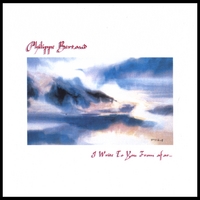
I Write to You from Afar...

A long travel in Asia inspired me to compose this album: temples on the shores of Mekong, serenity of rice plantations... Meditative, healing, spiritual, inspiring, comforting your heart and opening the gateway to your soul...

Click to listen to all the tracks, buy the CD or download MP3.

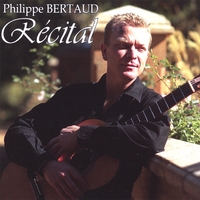
Recital

Soothing. Inspiring. Healing. And joyful. This is the musisc I love to play at night at home, by the fire place. A relaxing and soulful trip through the baroque, the Renaissance and Latin guitar.

Click to listen to all the tracks, buy the CD or download MP3.

Now the Villa Lobos DVD is released.


(You can read all the details on my blog. Villa Lobos's story, how the DVD has been filmed, details about the music...)


Villa Lobos Instructional DVD

This is the very first performance and instructional DVD about How to Play Villa Lobos' Preludes and Choros #1. Using the split screen and close ups, I show you in details all the possible fingerings for you to develop your own interpretation. Detailed exercises to play fast scales (like in Prelude #2), what is a Choros and how to play the rhythminc pattern, control the voicing and emphasize the inner voices (like in Prelude #5).

You will also learn how to play arpeggios evenly, increase the speed, and all the technical difficulties are subjects to exercises. Watch previews now:

Philippe Bertaud on the Music by Villa Lobos

This DVD is Produced by Garry Powell for Miramuse, LLC and internationally distributed by Carl Fisher Publishing.

Have fun with it and stayed the tuned: the next DVD is in preparation and will be released soon.

In the meantime you can check all next concerts and clinics.

Wednesday, June 10, 2009

Three notes per string - lesson 2

There is another run, in the Yngwie Malsteem’s fashion, at the very end of Smells Like Teen Spirit. Because I play the top string, I will use a thumb, ring finger, middle and pointer to play it. If you did not practice your tremolo exercises, and this technique is based on it, well, you better have to.
Otherwise, let’s go!
First of all, the right hand alone to make it even.


The Speed Bursts:
Here we are going to break down the Run by fingering patterns. As you probably noticed, I play a snippet, repeat it on the string above, move down, play another, repeat on the string above and so forth. Not complicated so far. Let’s work on each one… first at a slow pace, followed by speed bursts and putting everything together with your metronome…


Complete Run:

Saturday, May 23, 2009

Three Fingers for Your Scales...

Hi there!

Today, the subject is:
How to play fast with no hassle. I do not believe in a 3 hours warm-up to be able to play. Neither in a 10 hours daily practice. You have many things to do to enjoy your life, why staying in your bedroom practicing the guitar for hours and hours when, what you want, is to play music.
Technique is just a tool and here is another one to help you playing fast (do not listen the ones who tell "everybody has limits". We do not have any and the World is in a constant expansion.
This subject will be developed in the next DVD (release in October) "Tricks and Tips on the Acoustic Guitar". The examples are 2 runs I play at dazzling speed in my arrangement of "Smells Like Teen Spirit" by Nirvana. You easily can do the same and will probably do even better.
Ready? OK, let's go.

This technique is inspired by the banjo roll, PMI (in other words: Thumb, Middle and Index)
Practice on open string first and make sure your triplets are even.
Notice you have the same left hand fingering except for the ending. A long slide in the Django's fashion:


To make it even and have entire control, you’ll be working on different rhythmic figures. First you aim the first not of each triplet:


Then the second note of each triplet:


And finally the third. The advantage of such exercise is that you a total control on each note.
It is adapted from snare drum exercise book...


Play several times each formula until you are comfortable.
You can increase the speed using your metronome. Then we will use some speed bursts to progressively play the whole deal fast. Start with one string at a time…


And the complete run.
To play it fast, just focu on the first note of each MEASURE. Use it as a spring board to launch the whole lick. And let go...


Next time I'll teach you the second run, longer but you get the idea:
Just let it go after the first note...

Cheerios!
Philippe
PhilippeBertaud.com

Saturday, April 11, 2009

Chris Rea: Back to the Blues

English singer-guitarist, Chris Rea, like the Stones, the Beatles... has been influenced by the blues.

Fighting pancreatitis and back to the blues

Following a severe bout of pancreatitis, and a predicted 50% chance of survival after an operation called a Whipple procedure (pancreaticoduodenectomy) in 2001, Rea promised himself that if he recovered, he would be returning to his blues roots.
This near brush with death was the catalyst for a complete change in musical direction and motivation.
The resulting Blue Guitars 11 CD collection of 137 blues inspired tracks recorded in just 18 months, completed with his own paintings as album covers, is seen by himself as his finest work to date.
In an interview with the Britsound Radio Show, Rea revealed that
"it’s not until you become seriously ill and you nearly die and you’re at home for 6 months, that you suddenly stop to realize that this isn’t the way I intended it to be in the beginning. Everything that you’ve done falls away and start wondering why you went through all that rock business stuff."
So, in 2002, Rea returned to his blues roots, releasing the album Dancing Down The Stony Road following recording sessions in France and the UK. (An abridged version of the album was later released with the title Stony Road.) The album was followed by a DVD of the same name, comprising a "Making Of" documentary and footage from a concert in Cologne.
Rea set up his own JazzeeBlue label in 2003 to free himself from the pressure of record companies and their expectations. Since then he has released the blues albums Blue Street (Five Guitars) (an instrumental jazz-blues album) and then The Blue Jukebox (another jazz-blues influenced album released to critical acclaim). He has worked with David Knopfler for two albums, Wishbones (2001) and Ship of Dreams (2004).

Blue Guitars and Retirement

Chris Rea released his final box-set album, "Blue Guitars" in 2005. Consisting of 11 CDs and 1 DVD (Dancing Down The Stony Road), the album is Rea's testament to blues. Each album contains self-compositions, played and performed in a specific genre of the blues. The box-set includes a book containing reproductions of colourful paintings by Rea.

In an interview with the Britsound Radio Show, Rea declared that this box-set album is a result of his love for the blues:
"it’s just my first love. You know if you take music as romance, then blues was my first love you know, it’s my wife. And it’s with me all the time, and I just adore it."

This album closes the final chapter of Chris Rea's solo career as he does not intend to make any further solo records. He has stated that he would continue to make records with some of his favourite players under the name "The Memphis Fireflies". A double DVD set and a separate double CD set was released in 2006, including live selections from Rea's farewell tour titled "The Road To Hell & Back".

Friday, April 3, 2009

DVD Philippe Bertaud on the Music of Villa Lobos

Villa Lobos: From Rio to Hollywood, history of a passionate.

Most of the students coming to a master class will play a Villa Lobos' prelude or etude. Sharing with them this passion for the Brazilian composer, I decided to work on an instructional DVD.

First question: What do I have to say about him? Classical is known for being conservative but not Villa Lobos!
He had a lot of "non-intellectual" way to compose - what he used to call the Natural way. For instance, to move a chord shape all the way down or up through the finger board. Just like if you take a D Major and play it at any place on the neck and find some good ideas. Wes Montgomery used to do that a lot and not just him.
He also said that he did not want to use dissonances to sound modern. The idea is to portray Villa Lobos as a mix of popular and classical composer. Like Gershwin. Here was a guy from a not rich family, playing guitar in bars and streets to make some money. He used to tell a lot of stories about his travels in the Rain Forest, cannibals chasing him and other funny things… A lot of humor and the constant search for the Brazil's music soul.

The passion, the unlimited faith into his own talent leaded him to travel to Europe where he found a publisher (Max Eschig) and made friendship with famous artists like Stokowsky, Segovia and others…
1944: He went on tour to the U.S and composed for Hollywood! What a move! This picture is far from the desperate-romantic-intellectual composer driking to forget his sadness… Villa Lobos appears all the time with a smile, a big cigar from Bahia… more appealing to me!

As a teacher I try to present several options to the students for the fingerings and the interpretation with one motto:
Be Yourself!

The highest thing to me is when people can recognize your tone. Santana, Pat Metheny, Lee Ritenour, Paco de Lucia… just a few notes on the radio and you know who's playing.

I do not care for the supposed tradition. Can you imagine just following a model, specialy as an artist you want to be personal! Specially when models kill the expression to just play by the letter.
Everybody will play the same: Why bother to listen to a bunch of guy when you can listen to just one?

For the DVD I was looking for a lot of different type of fingerings, worked on them and decided to have a series of excercises that you can access from the menu.And, the top notch feature: a close up of both of my hands on the screen as I saw in a Chet Atkins video.The style can be important also - if you choose that option - also but the spirit comes first.

Villa Lobos assiduously took part in various "Choros", a type of popular music performed in the cafĂ© or open air and for which it's necessary to have a good ear and improvisation ability. The Choro musicians play during the carnival, in the street for fun and it reminded me to be in Rio and listen to choro bands on Sunday morning… or being in Laranjeiras on the beach at night, people jamming, chatting and having coco milk.
The Choros is also a rhythm. It's like a samba figure but slower and we have different parts, generally a verse alternate with a bridge.After that, you are free to forget about it and do your own. But I like to go back to the Brazil I have inside.Look at what I like about him. Music has to be enjoyable, a sensual experience, something you share with heart, soul.


The Brazilian life is the mold for the 5 preludes:

- The sertanejo (people living in North East). I love to imagine them riding their horses (you have a lot of ranches there… an extension of Texas maybe) Yep! Texas is big. You drive… drive, drive and still are in Texas… drive to Paris… you're still in Texas!

-The outlaws (sounds like Villa Lobos shared that taste for the lawbreakers with Jorge Amado). They are like picaresque… in the book at least. But some of them practice the capoera, live on the beach and use it as a house and a bed for love… nice, uh?

-Indian song (Lobos said he composed this one after he arrived into an Indian village where each one have been killed. The fast arpeggio represents the Indians running away in front of the death.

-Yemanja, the goddess of the sea also a tribute to Bach. When I play this one I love just to remember when, at the beach, I used to keep my head under water and listen to the waves dying on the shores.

-The young lovers in Rio. Evocation of the social life. The ball, the romantic conversations…You don't want to remove the expression from that and kill it!

This fellow knew how to write music, though I like to point at some details like the time signature in prelude 5 (every body plays that like a waltz instead of a 6/4). The rhythm in prelude 3 or the andantino tempo in the first one… Those leads are important for me to phrase the right way. And if I feel I have like an understanding, the music becomes mine. I love to dream when I play and want to share it.

There is cool website about Villa Lobos, it's the Museum in Rio de Janeiro.here it is: http://www.museuvillalobos.org.br/

Two years ago I started to work on the script and watch a bunch of DVD's and Videos. One of my favorite ones is Chet Atkins teaching some of his hits: Little Waltz, Young Things… He's way too fast in the teaching part - yeah, even for me - but the screen is splitted diagonally and you get a close-up of his hands. That's genious. Therefore it was one of my things.


When I moved to Austin and met Gary Powell I came up with this project and he was interested. Then, I worked some more on the script because I wanted to have it perfect. Gary is an artist, a true one with a lot of taste. We had a lot of conversation and visionned together some of my favorite DVD's.

Finally, even if Gary was hyper busy with 2 CD's productions, we schedule the session and I drove to Austin with one of my instrumental students, Brock Griffith. For one complete day he worked with Gary and David on the light set up. They end up with a cozy-inside tropical house looking that just amazed me.

The Thurday morning, at 10:00, we get into the studio and Brock arrange a prompteur for me…And then, we started to shoot the DVD. I was really ready, at 5:00pm it was done and ready for the editing phase. We took a breack and get a diner.
8:00pm we get back to recorded the preludes to complete the CD I started to record in Brazil few months ago with Bossa singer Denise Pinaud. At 11:00pm both projects were completed.

Then, we spend a huge amount of time conversing with Gary about the fact I should record a CD with songs. Which I never did. The Saturday, Amy and Gary had setup a concert in their fantastic house and Gary asked me to sing for the whole second set. So did I.

The reaction of the audience was so good that, right after the show, we stayed together brainstorming about the song project… that will be another story!

See you around, Philippe

Philippe Bertaud on the Music of Villa Lobos. Production Miramuse, Distribution Carl Fisher.
You already can watch some of the lesson and live performance on my website.