Howdy,
with the help of Nick Kinkade - great bluesman and Panda savior - I wrote:
Everything You Want to Know About the Blues.
It is very intricate to write a blues, I mean A BLUES, a good, a real one and a lot of people are asking me about "how to write a blues":
3 chords but the magic you'll put in between the notes will make all the difference in the world. The lyrics are really important too...
However you have some rules you cannot forget about the Blues, otherwise it will be everything but a blues, like a kiss without the salt of emotion.
The folks who know me also know how much I love the American Culture:
from the Levi's 501 - my favorite - to Panic at the Disco, I look at America and love each inch of the country and especially you people. Rickie Lee Jones is also another fantastic reason to love the US.
If you are new to Blues music, or like it but never really understood the whys and wherefores, here are some very fundamental rules:
1. Most Blues begin with: "Woke up this morning..."
2. "I got a good woman" is a bad way to begin the Blues, unless you stick something nasty in the next line like, "I got a good woman, with the meanest face in town."
3. The Blues is simple. After you get the first line right, repeat it.
Then find something that rhymes - sort of: "Got a good woman with the meanest face in town.Yes, I got a good woman with the meanest face in town... Got teeth like Margaret Thatcher and she weigh 500 pound."
4. The Blues is not about choice. You stuck in a ditch, you stuck in a ditch...ain't no way out.
5. Blues cars include Chevys, Fords, old Cadillacs and broken-down trucks. Blues don't travel in no Volvos, BMWs, or Sport Utility Vehicles...Most Blues transportation is a Greyhound bus or a southbound train. Jet aircraft and state-sponsored motor pools ain't even in the running...
Walkin' plays a major part in the Blues lifestyle. So does fixin' to die.
6. Teenagers can't sing the Blues. They ain't fixin' to die yet. Adults sing the Blues. In Blues, "adulthood" means being old enough to get the electric chair if you shoot a man in Memphis .
7. Blues can take place in New York City but not in Hawaii or anywhere in Canada . Hard times in Minneapolis or Seattle is probably just clinical depression. Chicago , St. Louis , Kansas City, Memphis , and N'awlins are still the best places to have the Blues. You cannot have the Blues in any place that don't get no rain.
8. A man with male pattern baldness ain't the Blues. A woman with male pattern baldness is. Breakin' yo leg 'cause you been skiing is not the Blues. Breakin' yo leg 'cause a 'gator be chomping on it is.
9. You can't have no Blues in an office or a shopping mall. The lighting is wrong. Go outside to the parking lot or sit by the dumpster.
10. Good places for the Blues:
a. highway
b. jailhouse
c. empty bed
d. bottom of a whiskey glass
11. Bad places for the Blues:
a. Nordstrom's
b. gallery openings
c. Ivy League institutions
d. golf courses
12. No one will believe it's the Blues if youwear a suit, unless you happen to be an old person, and you slept in it.
13. Do you have the right to sing the Blues? Yes, if:
a. you're older than dirt
b. you're blind
c. you shot a man in Memphis
d. you can't be satisfied
No, if:
a. you have all your teeth
b. you were once blind, but now can see
c. the man in Memphis lived
d. you have a trust fund or a $400k salary
14. Blues is not a matter of race or color.It's a matter of bad luck.
Tiger Woods cannot sing the Blues. Sonny Liston could have. Ugly white people also got a leg up on the Blues.
15. If you ask for water and your darlin' gives you gasoline, it's the Blues.Other acceptable Blues beverages are:
a. cheap wine
b. whiskey or bourbon
c. muddy water
d. black coffee
The following are NOT Blues beverages:
a. Perrier
b. Chardonnay
c. Snapple
d. Slim Fast
16. If death occurs in a cheap motel or ashotgun shack, it's a Blues death. Stabbed in the back by a jealous loveris another Blues way to die. So are the electric chair, substance abuse, anddying lonely on a broken-down cot. You can'thave a Blues death if you die during a tennismatch or while getting liposuction.
17. Some Blues names for women:
a. Sadie
b. Big Mama
c. Bessie
d. Fat River Dumpling
18. Some Blues names for men:
a. Joe
b. Willie
c. Little Willie
d. Big Willie
19. Women with names like Amber, Jennifer, Jade, Kitty, Kimberly, or Heather, and men with names like Christopher, Gary, Larry, David, Robert,or Biff can't sing the Blues no matter how manymen they shoot in Memphis .
20. It doesn't matter how tragic your life is,if you own a computer, you cannot sing the blues,period...Sorry.
Friday, March 20, 2009

Saturday, February 21, 2009
Patience...
Even when everything asks
For a little more calm,
Even when the body
Craves a little more soul,
Life does not stop.
While Time accelerates
And ask for haste
I make my own hour
To get into the dance;
Life is so precious...
While the World
Awaits for the cure
Madness pretends
Everything is normal
I dissimulate to have patience…
When the World each round goes faster,
People expect so much from the World,
And the World expects from us...
A little bit more patience
Would it be Time
That cannot perceive it?
Or do we have
All this life to waste?
Who does really want to know?
But life is precious...
So precious...
For a little more calm,
Even when the body
Craves a little more soul,
Life does not stop.
While Time accelerates
And ask for haste
I make my own hour
To get into the dance;
Life is so precious...
While the World
Awaits for the cure
Madness pretends
Everything is normal
I dissimulate to have patience…
When the World each round goes faster,
People expect so much from the World,
And the World expects from us...
A little bit more patience
Would it be Time
That cannot perceive it?
Or do we have
All this life to waste?
Who does really want to know?
But life is precious...
So precious...

Sunday, February 8, 2009
Choosing The Right Wood Type For Your Guitar
Spruce
Its high stiffness combined with the lightweight characteristics of most softwoods, makes it a natural for high velocity of sound.
A strong fundamental-to-overtone ratio gives Sitka spruce a powerful direct tone capable of retaining its clarity when played forcefully.
Sitka Spruce from North West Canada and Alaska -
Its high stiffness combined with the lightweight characteristics of most softwoods, makes it a natural for high velocity of sound.
Red spruce is relatively heavy, has a high velocity of sound, and the highest stiffness across and along the grain of all the top woods.
Like Sitka, is has a strong fundamental, but also a more complex overtone content.
Engelmann Spruce from North America is prized for its similarity in color to European (German) White spruce as well as its extreme lightness in weight which seems to produce a slightly louder and more projective or "open" sound than Sitka spruce.
Western Red Cedar from Western Canada and the Pacific Northwest of the United States.
It has long been used as a soundboard material by classical guitar makers for its vibrance and clarity of sound.
It's extremely light weight compared to spruce, and the tonal result is a slightly warmer tone, more open response.
An interesting characteristic of Red Cedar is that it sounds broken in, even when it's new.
Cedar looks a lot like redwood: darker and reddish compared to spruce.
Brazilian Rosewood
All the rosewoods contribute to tonal coloration. Brazilian rosewood is known for its high sound velocity and broad range of overtones, and is also characterized by strength and complexity in the bottom end and an overall darkness of tone in the rest of the range. Strong mids and highs also contribute a richness of tone to the upper registers.
Rosewood guitars also have a pronounced reverberant-like tone quality, caused by audible delays in the onset of certain harmonics. Brazilian rosewood has tremendous clarity in the bottom end and sparkle in the top.
When used for necks, Brazilian rosewood adds sparkle and ring.
Indian rosewood is also known for high sound velocity and broad range of overtones, strength and complexity in the bottom end and an overall darkness of tone in the rest of the range. Strong mids and highs also contribute a richness of tone to the upper registers. Indian rosewood has a thicker, more midrange overall coloration.
When used for necks, Indian rosewood can help fatten up the midrange.
Ebony, the traditional material found on the necks of violins, classical guitars, and high-end steel strings, has the lowest velocity of sound of all the woods commonly used and has definite damping characteristics.
While not a problem for large-bodied guitars made of red spruce or Brazilian rosewood, it may be something to consider when designing smaller guitars, particularly those using less resonant tonewoods for tops and backs.
Its high stiffness combined with the lightweight characteristics of most softwoods, makes it a natural for high velocity of sound.
A strong fundamental-to-overtone ratio gives Sitka spruce a powerful direct tone capable of retaining its clarity when played forcefully.
Sitka Spruce from North West Canada and Alaska -
Its high stiffness combined with the lightweight characteristics of most softwoods, makes it a natural for high velocity of sound.
Red spruce is relatively heavy, has a high velocity of sound, and the highest stiffness across and along the grain of all the top woods.
Like Sitka, is has a strong fundamental, but also a more complex overtone content.
Engelmann Spruce from North America is prized for its similarity in color to European (German) White spruce as well as its extreme lightness in weight which seems to produce a slightly louder and more projective or "open" sound than Sitka spruce.
Western Red Cedar from Western Canada and the Pacific Northwest of the United States.
It has long been used as a soundboard material by classical guitar makers for its vibrance and clarity of sound.
It's extremely light weight compared to spruce, and the tonal result is a slightly warmer tone, more open response.
An interesting characteristic of Red Cedar is that it sounds broken in, even when it's new.
Cedar looks a lot like redwood: darker and reddish compared to spruce.
Brazilian Rosewood
All the rosewoods contribute to tonal coloration. Brazilian rosewood is known for its high sound velocity and broad range of overtones, and is also characterized by strength and complexity in the bottom end and an overall darkness of tone in the rest of the range. Strong mids and highs also contribute a richness of tone to the upper registers.
Rosewood guitars also have a pronounced reverberant-like tone quality, caused by audible delays in the onset of certain harmonics. Brazilian rosewood has tremendous clarity in the bottom end and sparkle in the top.
When used for necks, Brazilian rosewood adds sparkle and ring.
Indian rosewood is also known for high sound velocity and broad range of overtones, strength and complexity in the bottom end and an overall darkness of tone in the rest of the range. Strong mids and highs also contribute a richness of tone to the upper registers. Indian rosewood has a thicker, more midrange overall coloration.
When used for necks, Indian rosewood can help fatten up the midrange.
Ebony, the traditional material found on the necks of violins, classical guitars, and high-end steel strings, has the lowest velocity of sound of all the woods commonly used and has definite damping characteristics.
While not a problem for large-bodied guitars made of red spruce or Brazilian rosewood, it may be something to consider when designing smaller guitars, particularly those using less resonant tonewoods for tops and backs.
Wednesday, February 4, 2009
Meet my new Love: She’s from Spain and she’s Hot!

Alhambra is a well known palace in Spain and, for the guitarists, it's also what inspired Tarrega to compose one of the most beautiful tremolo piece.
But did you know it's also a Spanish Guitar Brand? It is actually one of the most famous in Europe. Can you dream of any better than a Spanish guitar? All countries have a different conception of guitar sound but when it comes to Spain the personality is the first thing that will strike you along with the projection of the sound, the warmth and the tradition. Tradition is the key word: Those guys have made guitars for centuries; therefore, nobody can catch up with them!
A Little Bit of a Story
When you hold an Alhambra Guitar in your arms, you hold all of that. When my Friend and associate John Francis first promoted the Alhambra guitars to me I thought they were just another student model. Imagine my surprise when one of my students showed up with an 8-P model electric-acoustic that he had purchased from John's online shop. The first thing that struck me was the beauty of the instrument. Perfect craftsmanship and beautiful woods make this instrument one of the most impressive I have seen.
Alhambra 8-P

The Alhambra 8-P is an all-solid entry concert-level quality classical guitar with a wonderful richness of tone. But richness is not the only thing: the sound projection is so amazing that I had the urge to compare with the guitar I played at that time, hand made and priced at $10,000. That was an experience! This Alhambra was just louder than my $10,000 guitar… OK, let's try again… unbelievable! The action was also just perfect: high enough to make the guitar sing but extremely comfortable. Basses and trebles were balanced which allows having a full control of the voices and to emphasize whatever voice you want without any struggle. Therefore you become the conductor and have a complete orchestra under your fingers. It is hard to imagine all the possibilities this instrument offers and the limits are just my imagination. I just could not believe it and had a hard time giving the guitar back to my student.
Alhambra model 8P guitars and above are built by a smaller, more experienced team at the Alhambra facility. They feature a lighter, nitrocellulose lacquer finish and a bridge-like cross bracing. All of these factors work together to give this guitar a very beautiful, loud, and refined sound. Its cedar top gives it a nice warm tone quality with excellent volume and clarity.


I called Alhambra and wanted to try the high-end concert models. The good news was: they were to be at the Summer NAMM Show where I went, anxious and excited.
Here they are!
Imagine a huge booth with dozens of amazing guitars exposed! All the guitars I have seen on their website, where I spent hours and hours, were there. My attraction led me to the Luthier Rio Model. I had looked at this guitar for hours on the internet and would finally play one!
Luthier Rio Spruce
The Alhambra Luthier Rio is a beautifully crafted by two of the master luthiers at Alhambra, Javier Mengual and José Margarit. Just touching it was a sensual experience, the beautiful finish; I should say the perfect finish, the incredible quality of Solid German Spruce top with very tight and regular nodules all across it. The back and sides are made of Brazilian Rosewood. Let's take a closer look at the sides. The book matching is perfect the grain appears to create one continuous line, and showcases a dramatic effect. How many hours did they spend matching it and have a perfect continuous pattern? The purfling itself is a piece of art.
This guitar has an amazingly rich and refined tone. Also, just by moving my finger a millimeter I get a different sound, just a millimeter! Can you imagine when you move your right hand from bridge to neck the incredible range of sound you have? It is a gazillion colors palette. It has a revolutionary floating bracing pattern that givesit a really phenomenal tone and projection. This guitar has an amazingly rich and refined tone, also, just by moving my finger a millimeter I get a different sound, just a millimeter! Can you imagine when you move your right hand from bridge to neck the incredible range of sound you have? It like a gazillion colors palette. It has a revolutionary floating bracing pattern that gives it a really phenomenal tone and projection.

Its fullness, tone quality, craftsmanship, volume, projection, and playability are superb. This guitar is a wonderful example of the fine work of the luthiers at Alhambra. This is by far the best guitar that I have played. I am in the process of re-working my whole repertoire and explore the endless possibilities of tone for new interpretations. And, trust me, I possessed some of the most expansive guitars but this one is the one I was looking for.
She's my new love and forever!
Facebook me!


Wednesday, January 28, 2009
Postcard to a Young Actress [My Favorite Love Song]
 One morning I was sipping my coffee in Rio - Brazil - in the house of one of my most beloved Friends, Luis Pinaud.
Luis loves the singer Milton Nascimento and, while we where talking, sipping coffee in the kitchen, he played this Milton's CD and the song, Carta a um Jovem Ator brought me into tears. I could no stop listening to this song that became my favorite love one.
I take this icy morning to translate it into English:
Postcard to a young actress...
One day, if I meet you,
I will confess
That I watched a film of you so many times
I could unmask your eyes.
One day, if we talk
And share about what we lived,
And expect from tomorrow,
- Perhaps that can happen? -
You will see how parallel we are.
I want to know everything about you
And make you happy.
A calm water will flood
Your shores of tenderness,
I will offer you
An open heart into arrive...
Your name, so different,
Is a surrounding scenery,
A landscape of innocence
No one knows where it takes to...
But, me, the only one knowing about you, I know:
It's taking me back to this moment,
When, My eyes shining of emotion and gratefulness,
I watched this movie of you so many times
That this poem came to life.
Tuesday, January 27, 2009


Sunday, January 4, 2009
How to Use a Metronome
Choosing a Metronome
I use a very advanced Metronome allowing all the beats combination. It's also a very precise tuner and is sturdy. The only metal enclosure that I know of:
Click to buy it!
 The Planet Waves Full Function Tuner & Metronome is the ultimate all-in one musicians practice tool. An intuitive, patent-pending rotary LED interface is combined with a precision dual-mode sweep/strobe chromatic tuner and professionalmulti-function metronome.
A metronome is as a tool to gauge you progress. By starting on a slow tempo and working your speed up, you can see how much progress you are making, set goals, achieve the goals and move onward!
Exercises:
Set the metronome at 60 (that means 60 beats per minute) listen to it and count quarter notes along with the beats: 1 - 2 - 3 - 4. Make sure you can listen to the metronome and then play 1/4 notes on an open string along with the beats. Just be sure you can hear the metronome.When you are comfortable with 1/4 notes, count eight notes and, once you're doing OK, play 1/8 notes on open string.Repeat the same thing with triplets and 1/16.

hold it there for a while, then increase it to triplets

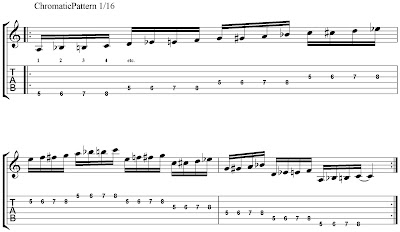
OK, now practice on a study or sniplet. It is important to set the metronome clicks to a very comfortable, slow, speed when starting to learn a piece. If used when starting to learn a piece, inaccuracies in note values will not be learned. Repeating a phrase or two at a time, and using the metronome to count the beats between repetitions is a very useful technique. As notes are learned, additional phrases can be added to the loop until an entire section is practiced.
The metronome can be used as an anchor through long repetition practice. This ensures that note and rhythmic accuracy are maintained. Players can use the metronome to physically settle in to a piece.The metronome can be used to gain familiarity and memorization.
Before a piece is performed, there needs to be complete mastery of the notes, there cannot be any insecurity. Once the notes are mastered, then sing the rhythm and, if it's a really difficult one, play only the rhythm on open string. Then, when you get it down ad the notes at a comfortable tempo. Make sure the phrasing is flowing and not patched. An easy, steady pace encourages the release of tension in the arms and hands. Many technical problems work themselves out by using the metronome wile playing.
How to use the metronome to overcome technical difficultiesLet's say you have to play an arpeggio in 16ths at a fast tempo.

First, start to learn all the notes and play the chords first


Practice a few measures at a time. When you're ready take another group of a few bars... One you're comfortable, put them together.Do the same thing with next groups and the first page... and so on.
Always start with a little group. The metronome will also be as a gauge to measure your progress.
I use a very advanced Metronome allowing all the beats combination. It's also a very precise tuner and is sturdy. The only metal enclosure that I know of:
Click to buy it!
 The Planet Waves Full Function Tuner & Metronome is the ultimate all-in one musicians practice tool. An intuitive, patent-pending rotary LED interface is combined with a precision dual-mode sweep/strobe chromatic tuner and professionalmulti-function metronome.
 The lightweight, durable metal enclosure includes a pull-out easel for desktop use.
• Intuitive patent pending 12-segment rotary LED display
• Sweep and Strobe Mode Tuning
• Full-featured Metronome
• Full-range pitch pipe function
• Sensitive condenser mic
• 1/8 headphone jack
• DC power input jack for optional AC adapter
• Seperate mute and volume controls• Accurate to +/- 3 cents
Using A Metronome
Why is this necessary? What are the objectives?
Human beings are not born with "perfect time" or "internal clocks". All musicians must and will spend much time practicing with a metronome to develop a sense of tempo and groove. Musicians have to learn to keep steady beat in spite of fluctuate constantly.
So, daily practice with the metronome will help you master the music pieces you want to play and measure your progress.
So, daily practice with the metronome will help you master the music pieces you want to play and measure your progress.
Coordination:
The metronome forces us to listen to a consistent click and match it.
In ensemble playing we must be able to listen to and match other players. To do this we have to feel when the next beat will come, we can't listen for it then play it. To this end it is necessary to play consistently from beat to beat and measure to measure.
Rhythm is the spine of music because it will give the drive and in ensemble playing it is one more contributor to ragged groove (I'm even talking about classical here).
The students usualy say they can't hear it.
But, the idea is to split your attention into something besides your own playing, in this case the sound of the metronome.
The metronome forces us to listen to a consistent click and match it.
In ensemble playing we must be able to listen to and match other players. To do this we have to feel when the next beat will come, we can't listen for it then play it. To this end it is necessary to play consistently from beat to beat and measure to measure.
Rhythm is the spine of music because it will give the drive and in ensemble playing it is one more contributor to ragged groove (I'm even talking about classical here).
The students usualy say they can't hear it.
But, the idea is to split your attention into something besides your own playing, in this case the sound of the metronome.
You can learn to hear it; firt by singing the rhythm instead of playing it directly on your guitar.
Practicing with the metronome does not make the music rigid. It helps you to gain control of tempo, learn to play with others and improve one's playing. It is easy to play a loose tempo; you won't forget how when you need to.
Practicing with the metronome does not make the music rigid. It helps you to gain control of tempo, learn to play with others and improve one's playing. It is easy to play a loose tempo; you won't forget how when you need to.
For all these reasons it just makes sense that you practice your music pieces in time. This way you will develop the technical ability for your fingers to remember the scale and chord shapes and at the same time learn to play them on the beat. It only takes a little extra effort to practice this way but pays huge dividends in your playing.
A metronome is as a tool to gauge you progress. By starting on a slow tempo and working your speed up, you can see how much progress you are making, set goals, achieve the goals and move onward!
Hints:
1) Always play slow and clean.
1) Always play slow and clean.
2) Start with quarter notes (1 note per click)
3) Advance to eighth notes (2 notes per click)
4) Do triplets too! (3 notes per click)
5) Keep track of you metronome speed settings and try to improve them.
6) Move your foot up and down with the down matching the click.
Exercises:
Set the metronome at 60 (that means 60 beats per minute) listen to it and count quarter notes along with the beats: 1 - 2 - 3 - 4. Make sure you can listen to the metronome and then play 1/4 notes on an open string along with the beats. Just be sure you can hear the metronome.When you are comfortable with 1/4 notes, count eight notes and, once you're doing OK, play 1/8 notes on open string.Repeat the same thing with triplets and 1/16.
Let's take a chromatic pattern on frets 5-6-7-8 and repeat excercises.

The goal is not to go fast but accurately play on the beat.
Just play 1/4s to get a feel for the beat and get comfortable.
Just play 1/4s to get a feel for the beat and get comfortable.
Once you feel comfortable, increase it to 1/8ths


hold it there for a while, then increase it to triplets
old it there for a while then increase it to 16ths

Do not increase the number of notes per bar until you are totally comfortable with what you're playing.
Now increase the tempo, but only increase it by 10bpm at the most - then start practicing 1/4s at this tempo, and work up to 1/16ths as you did at the previous tempo.
Advanced Metronome Practice Tricks
A helpful trick to strengthen your timing ability is to play around with adding and removing subdivisions of the click.
Advanced Metronome Practice Tricks
A helpful trick to strengthen your timing ability is to play around with adding and removing subdivisions of the click.
For example, instead of playing sixteenths over a quarter-note click, try doubling up the click so it is doing eighths. Yet as you play over this, retain the feel of the main pulse only on downbeats (every other click). In this case the "middle" eighth click is there just to help you mark the upbeat more precisely so you can focus on hitting that note (the 3rd sixteenth) precisely on time.
After playing like this a while, then halve the click tempo back to quarter notes and focus on supplying the same articulated feel of the upbeat -- but without that middle click to support you.
Along the same lines, try removing beats entirely. Transform 16th notes into 32nd notes by halving the speed of the click. Or you can think of this as still playing 16ths, except the click only cues you to every other beat. Then let the click hit just every third beat. That's tough! The slower the click goes, the more space you must fill to stay in time.
When playing exercises or pieces containing a constant flow of notes-straight eighths for example-my favorite trick is to move the click to hit different notes of the pattern. The 3:2 ratio (a hemiola) is the best place to start.
So instead of playing eighth notes, for example, change the beat to fall on every 3rd note and play the same sequence in triplets. Wow! That breathes new life into old, stale exercises. The 3:4 (triplets on sixteenths) pattern gives a similar effect. You can also try 4:3 and 5:4 for a little more adventure. After a little practice with this kind of rhythmic interplay, it comes easy yet always feels more interesting. It literally feels brand new, yet your fingers seem to already know the way.
Next try moving the click to a rhythm off of the beaten path. That is, instead of making the click define the pulse, you make it play quarter note triplets for example. Now YOU generate the feel of the pulse and it clicks away somewhat "against" you. On top of that, play your exercise in eighth or sixteenths or whatever. That puts an entirely new spin on things!
OK, now practice on a study or sniplet. It is important to set the metronome clicks to a very comfortable, slow, speed when starting to learn a piece. If used when starting to learn a piece, inaccuracies in note values will not be learned. Repeating a phrase or two at a time, and using the metronome to count the beats between repetitions is a very useful technique. As notes are learned, additional phrases can be added to the loop until an entire section is practiced.
The metronome can be used as an anchor through long repetition practice. This ensures that note and rhythmic accuracy are maintained. Players can use the metronome to physically settle in to a piece.The metronome can be used to gain familiarity and memorization.
Before a piece is performed, there needs to be complete mastery of the notes, there cannot be any insecurity. Once the notes are mastered, then sing the rhythm and, if it's a really difficult one, play only the rhythm on open string. Then, when you get it down ad the notes at a comfortable tempo. Make sure the phrasing is flowing and not patched. An easy, steady pace encourages the release of tension in the arms and hands. Many technical problems work themselves out by using the metronome wile playing.
How to use the metronome to overcome technical difficultiesLet's say you have to play an arpeggio in 16ths at a fast tempo.

First, start to learn all the notes and play the chords first

Then, play 8ths

Are you ready? OK, play the first beat with 16ths, and a 1/4rest, second beat, 1/4rest, 3rd and rest, 4th and rest.Now, play the arpeggio without the rest.

You want play faster?
Do not target all the beat, but, instead, aim the 1st and 3rs beat and emphasize them:

Practice a few measures at a time. When you're ready take another group of a few bars... One you're comfortable, put them together.Do the same thing with next groups and the first page... and so on.
Always start with a little group. The metronome will also be as a gauge to measure your progress.
Note the speed you reached and try to go faster the next day... You'll build up the speed every day.
Makes sense you have to practice on a regular basis...
Makes sense you have to practice on a regular basis...
Have any question? Write a comment and I will answer.
Cheers,
Philippe http://www.philippebertaud.com/
Tuesday, December 30, 2008
Guitar For Sale: Guitar Kenny Hill La Curva: the perfect combination of a refined classical concert guitar and a crossover one.($,2000)
 Concert guitar made by World-wide famous guitar maker Kenny Hill, La Curva Guitar is the perfect combination of a refined classical concert guitar and a crossover one.
La Curva is an excellent, concert grade, hand made nylon string guitar, featuring a narrower neck and cutaway.
Built in the classic style of Herman Hauser I, this model guitar has excellent clarity, projection, and beauty of sound.
The classic body shape makes it a very friendly guitar to handle and a very comfortable instrument to play. They are wonderful for players who need extra access to the highest notes on the fingerboard:
flamenco players who capo up higher, bossa nova and jazz players - anyone who wants the advantage and styling of a beautiful, concert-quality cutaway.
Most steel string players have never played a truly fine nylon string guitar, or if they have, the width of the classical neck can be uncomfortable for a non-classical player.The beauty of nylon strings is in the tone colors they produce, and the light weight construction and finesse of building bring these colors out.
Sound board: Englemann spruce
Back & sides: Indian rosewood
Neck: Spanish cedar
Fingerboard: ebony
String length: 650mm
Tuners: Schaller
Kenny Hill is a widely recognized name in the world of classical guitars. He operates a shop in Felton California were he builds a catalog of several different styles and models.
Track of Jazz Guitarist Roy Patterson (roypatterson.com) playing La Curva:
Video Classical Guitarist Philippe Bertaud playing La Curva in Villa Lobos DVD:
Sunday, December 21, 2008
Want to learn tremolo?
The key in a good tremolo is evenness and articulation.You need to focus on regularity and each note should have the same volume and duration.


Exercise 4 introduces P playing on different strings to create a bass line.

Exercise 5 is the same but without the rest. You will play now a continuous tremolo but still at the half of the speed. A tremolo is usualy written in 32nd notes and, at this point we are still playing 16th notes:

Exercise 6 introduces the 32nd notes, still on open strings:

Exercise 7 is the same but with chord changes: C - G - Am - Am - F - G7 - C

Working on a song like Recuerdos de la Alhambra, start with just the chords and then ad your tremolo.
First of all you’ll need a metronome.
Then, practice the first speed burst exercise on all the open string. I start at 60 but you can start slower. Always use a speed you're comfortable at and can control every thing. Practice on the 6 strings.
[Click on images to enlarge]

When you feel comfortable, practice 2 and 3, increasing the speed burst. Keep the metronome at 60 and progressively go to 120.

When you feel comfortable, practice 2 and 3, increasing the speed burst. Keep the metronome at 60 and progressively go to 120.


Exercise 4 introduces P playing on different strings to create a bass line.

Exercise 5 is the same but without the rest. You will play now a continuous tremolo but still at the half of the speed. A tremolo is usualy written in 32nd notes and, at this point we are still playing 16th notes:

Exercise 6 introduces the 32nd notes, still on open strings:

Exercise 7 is the same but with chord changes: C - G - Am - Am - F - G7 - C

Working on a song like Recuerdos de la Alhambra, start with just the chords and then ad your tremolo.
Have any question? Write a comment.
Take it easy,
Philippe
Wednesday, December 17, 2008
The Real Life!
For a long time I thought my life will start soon.
But there always were obstacles to surmount, problems to solve first, moments to spend, bills to pay... And then: THE REAL LIFE WILL START!
Till I realize these obstacles were precisely my life...
This point of view helped me to understand there is no way leading to happiness. Happiness is the way.
This point of view helped me to understand there is no way leading to happiness. Happiness is the way.
Thus, remember that time does not wait.
When one spends each moment as a special one, even more, when one shares this moment with someone special, special enough to share our time with, this is Happiness.
Therefore, enjoy each moment as a unique one. Enjoy your morning and the new day coming like a new venture to live. Make your day a happy one.
Cheers,
Philippe
Subscribe to:
Posts (Atom)


 Posts
Posts


